
An Antidote for Stress: Sudoku
As students undergo stress as the school year goes on, this simple Japanese game may be a perfect solution.

Heavier backpacks, indecipherable notes, and desks that appear struck by a tornado are all tell-tale signs for students that the hardest season, winter, is quickly approaching. In the form of these symptoms, stress spreads like a disease among students in varying degrees. Though the idea of endless midterms seems daunting, there is a cure: Sudoku.
For those unfamiliar with the game, Sudoku is a logic puzzle where you fill a 9x9 grid with digits so that each column, row, and 3x3 subgrid contains each number from 1 to 9 exactly once. The goal is to fill in the entire grid with digits by using the already filled-in squares as hints. Though it seems simple, Sudoku can be challenging, which actually improves memory and reduces stress.

To truly understand the metamorphic benefits of Sudoku, one’s mind must be opened enough to look past the initial insignificant appearance of the game. In fact, Sudoku has touched the hearts of some students, such as sophomore Stella Laning.
“By completing just one puzzle a day, I grew to really love the game and even added it to my morning routine to help my brain wake up for school,” Laning said.
The game isn’t just a fun pastime—it has significant positive cognitive effects. Don’t take my word for it, as the benefits of Sudoku are backed by science and extensive research.
“In the online PROTECT study of 19,078 individuals aged 50-93 years, performing these puzzles was associated with better performance on the 14 cognitive measures examined,” according to the National Library of Medicine.
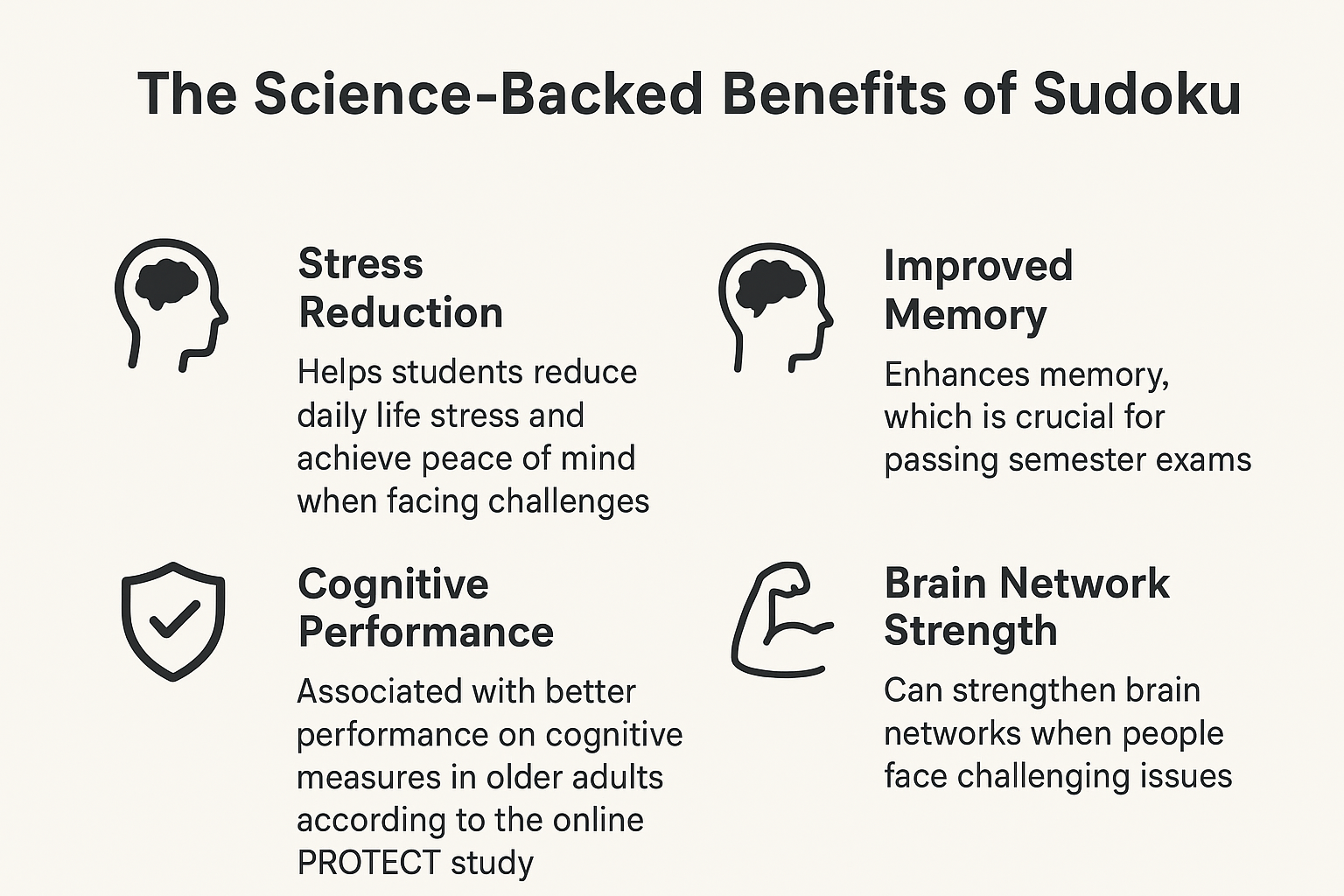

A strong memory is crucial to passing semester exams, so students could play a daily Sudoku puzzle to help mentally prepare for these rigorous tests. Not only does it improve memory, but Sudoku helps students reduce the daily stress of life.
“When people face challenging issues in their lives, this game [Sudoku] can also help them strengthen brain networks and cognitive abilities and achieve peace of mind,” according to the Journal of Family Medicine.
All in all, students are encouraged to try out this game and start building a community centered around growth in academic success, or to simply have a fun, new game to play.