
The Effects AI Has On School
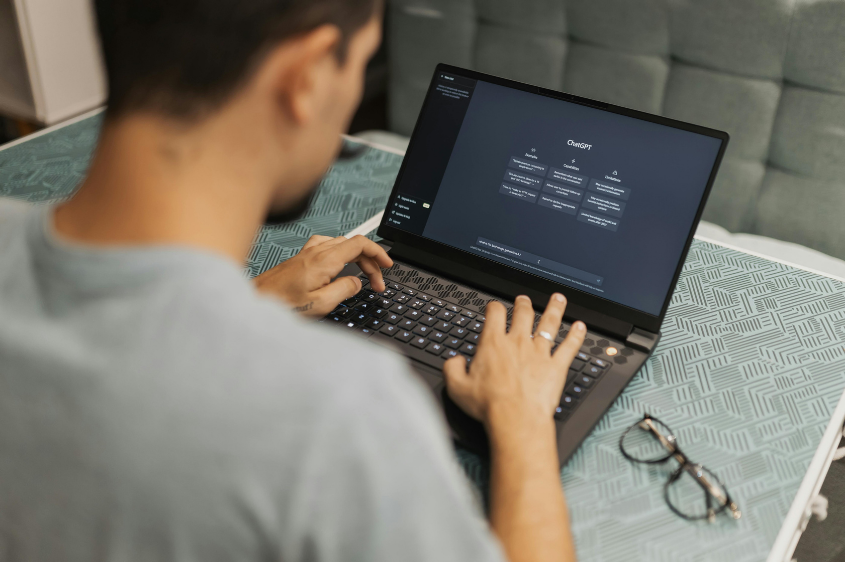
Students and teachers weigh the benefits and concerns of using artificial intelligence as a learning tool in school.
By Alba Callinder and Azariah Williams
JPxG, Public domain, via Wikimedia Commons
Is using AI to help write a paper any different from getting a tutor's or teacher's help? Or is AI a shortcut that harms students' learning abilities? As different forms of AI spread, students, teachers and administrators are debating academic integrity. What does the future of AI look like in schools?
For some students, AI isn't about taking a shortcut or cheating, but about getting extra support.
“I don't really use AI to cheat; I normally use it as a resource when I don't really understand what the teacher is talking about,” freshman Bella McMillion said.
Some students, instead of replacing effort, actually use AI as a tutor. For McMillion, AI can act as a resource when she needs something explained in a different way or needs extra help learning and mastering a difficult topic.
However, not every student uses AI in the same way. Some students use AI to help brainstorm ideas, check over their work, or have a better understanding of an assignment, while others may depend on it for all their work. This raises questions about where the line between using AI as a resource and using it to cheat needs to be drawn.
Not only does this raise concerns for the school itself, but it also raises questions for teachers about how they teach, give assignments, tests and quizzes, and assign homework. Teachers must constantly consider: Is this their students' originality?
“I have to be a lot more careful because theater is a more naturally creative discipline,” theater teacher Courtney Kissling said. “I have to make sure this is my students' creativity.”
Kissling's concerns show that AI can be especially complicated in classes where creativity and original ideas are a huge part of the work.
_artificial_intelligence_icon.png)
The debate over AI in schools is not about whether it's good or bad; it depends on how students choose to use AI. AI can be used as a learning tool, but students still need to put effort into learning the material for the class rather than depending on AI to do every test, quiz or homework assignment. Looking at the use of AI from a different perspective can also raise the question of whether using AI for school has benefits or drawbacks.
For some student-athletes, AI can provide additional support when busy schedules make completing schoolwork more difficult.
"During the day, I tend to be exhausted, so I'm not very focused in class,” sophomore London Lewis said. “As soon as I get home, I use AI to help me better understand the assignments and lessons I wasn't focused on in class. This helps me be able to complete things and keep up with my grades, so I'll still be able to participate in sports activities."
For Lewis, AI provides additional support when balancing academics and sports becomes difficult.
On the other hand, some students use AI to help them finish work by the due date. Some teachers are concerned about the effect AI may have on students. Some students may not fully understand the rules and guidelines surrounding AI use, which can lead to consequences when they use AI in ways that are not permitted. The use of AI in school is to help support students on assignments and not to help them cheat their way through.
“Guidelines about AI are listed in the Code of Conduct, but some of them are also based on what teachers say,” Principal Dr. Royce Turner said. “If a teacher says you can use AI at some level of support, then that will be fine in that class. But if the teacher says not to use AI as support on an assignment, then that's the guideline that needs to be followed.”
The rules surrounding AI use can vary by assignment and teacher, making it important for students to understand what is allowed before using AI for schoolwork. The use of AI is a confusing topic; people today argue about whether AI is a benefit or a drawback to student learning.