
I.C.E. On The Road: A Cold Trail of Controversy

usicegov, Public domain, via Wikimedia Commons
I.C.E.’s recent actions have sparked national outrage and local fear, raising questions about the agency’s tactics and the impact on communities across the country.
How I.C.E. Took Shape
The U.S. Immigration and Customs Enforcement, or I.C.E., is an agency that focuses on border security, immigration violations, and the removal of non-citizens. However, to many people who reside in the United States, their definition of I.C.E. is much different. Many people describe them as officers who cause injustice and violently detain citizens, even when some are innocent.
On March 1 of 2003, the “U.S Immigration and Customs Enforcement”, better known as I.C.E., was formed as a part of the Homeland Security Act of 2002, which reorganized the federal government after the terrorist attacks of 9/11.
Their purpose was to stop illegal trade, smuggling, and trafficking, as well as to reinforce the immigration laws of the U.S. They were designed to handle both immigration enforcement issues and customs investigations under the Department of Homeland Security (DHS). But unfortunately, this contrasts with the recent experiences of those in the communities affected by I.C.E.
A Cold Front of Controversy
Recently, I.C.E. has been getting a lot of new attention due to its recent controversial tactics and methods of detaining suspects. This attention has grown due to several recent incidents involving I.C.E. detaining suspects, where the public feels they used unnecessary violence and carried out arrests that were not justified.

usicegov, Public domain, via Wikimedia Commons
For example, one incident that has drawn significant public attention is the case involving Liam Ramos, which raised questions about how I.C.E. agents conducted the arrest and the level of force that was used, as well as the lack of a legitimate reason for detainment. Liam Ramos, a 5-year-old child, was detained by I.C.E. agents along with his father, Adrian Alexander Conejo Arias, who was also detained on January 20, 2026. According to reports, the agents stopped the vehicle carrying Ramos and his father during an enforcement operation. Witnesses stated that the situation escalated quickly, and many had questioned why such a young child was detained in the first place. This incident raised concerns nationwide about whether the I.C.E. agents on the scene had followed proper procedures and protocols and whether the level of force used during the incident was necessary. This situation would spread across social media and news outlets nationwide, becoming a major example cited by the public when discussing concerns about I.C.E.’s enforcement practices. Many people pointed to the case as evidence of broader issues in how the department handles detentions.
Freezing Points: Two Lives Lost and a Disturbing Pattern

Jonathan Ross, Public domain, via Wikimedia Commons
On January 7, 2026, 37-year-old mother and U.S. citizen Renee Good was shot and killed during an I.C.E. operation while she was acting as a legal observer in her area. Local officials later stated that Good had been monitoring the operation as part of a community legal observer until the situation escalated. The federal authorities on the scene described the shooting as “defensive”, but city and state leaders felt differently. They stated that they were denied access to key evidence and, therefore, they were unable to conduct a full investigation. Good’s death sparked immediate protests across the city of Minneapolis, with many residents arguing that the use of lethal force was extremely unnecessary and avoidable. Sadly, this would not be the only life taken by I.C.E. that month.
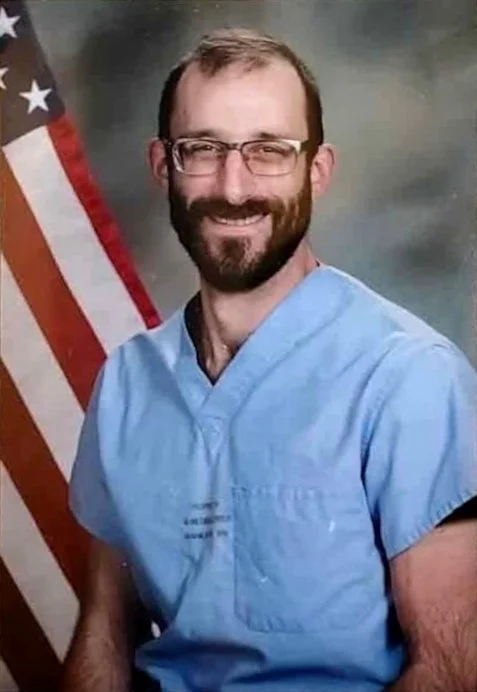
United States Department of Veterans Affairs, Public domain, via Wikimedia Commons
Later that same month another I.C.E. operation led to the death of a citizen. That event was the fatal shooting of 37-year-old Alex Jeffery Pretti. According to the reports, Pretti was approached by I.C.E. agents early in the morning of January 24, and the encounter escalated very quickly. At around 9 a.m., the 37-year-old was shot and killed. Security footage of the incident and eyewitness videos released show the I.C.E. “agents appearing to fire at least 10 shots in a span of five seconds,” as documented in a New York Times Article.
Despite occurring weeks apart, the deaths of Renee Good & Alex Pretti share another similarity. Both individuals were described as non-violent and were not reported to have posed any immediate threat to the I.C.E. officers that warranted gunfire. In both cases, the federal officials labeled the shootings as acts of defense, while local leaders raised concerns about the accuracy of those accounts and the lack of clarity surrounding what happened. The use of excessive lethal force against people with no known violent history fueled the emotions of the public and intensified questions about how I.C.E. conducts its operations.
Community members have also pointed to reports that some I.C.E. agents had left Ace of Spades "death cards" in the homes or cars of those detained by I.C.E. These cards have a long and unsettling history. During the Vietnam War, some U.S soldiers would take an Ace of Spades card and leave it on the body of dead Vietnamese soldiers as a form of psychological warfare, similar to a calling card to intimidate others. The cards reported in recent I.C.E. operations follow the same format but now include an I.C.E. logo and the address of a detention facility. The appearance of these cards has begun to raise concerns about the message being implied and what it suggests about the culture within certain enforcement teams.
The Icy Lens
In response to the recent incidents, I.C.E. officials have emphasized that their agents act within the federal guidelines and follow established procedures in every operation. The agency has begun to push back against criticism, stating that these situations can be unpredictable and require officers to make rapid decisions to protect their own safety as well as the public. “I.C.E. officers risk their lives every day to keep our communities safe. When individuals choose to interfere, they are not helping anyone; they are endangering lives and undermining public safety,” an I.C.E. spokesperson said in a statement to DC News Now. I.C.E. added that they will continue to carry out their mission to enforce the federal immigration laws as they are ordered to.
When the Stage Meets the Streets
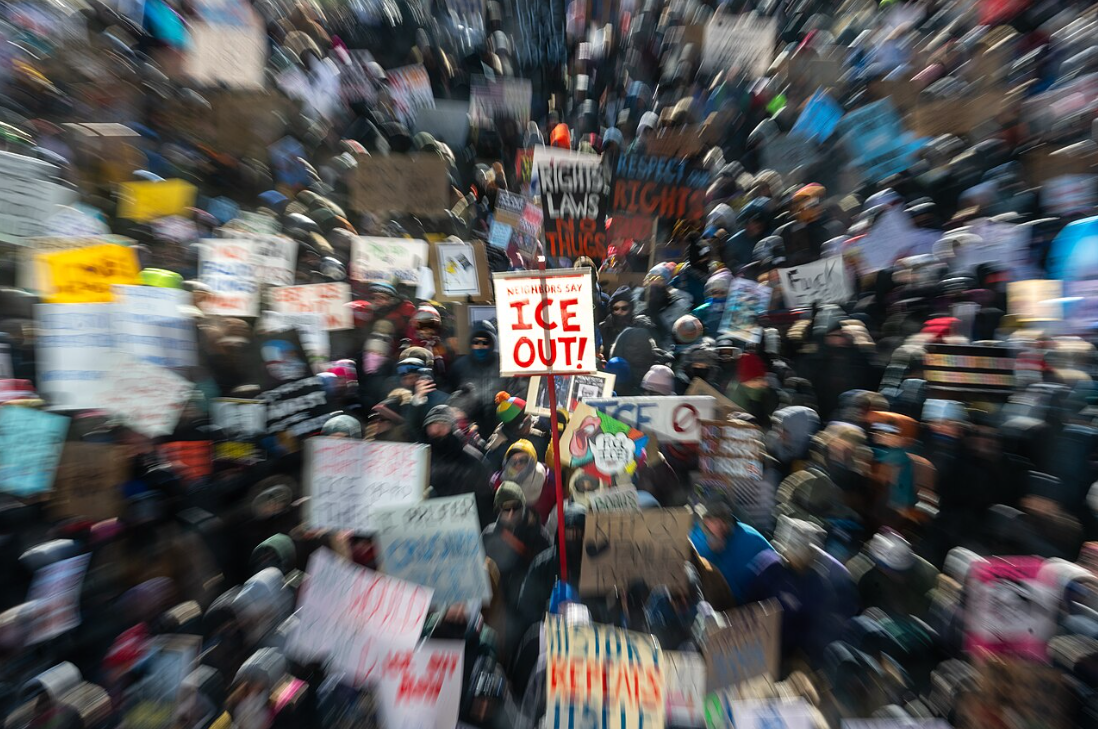

.jpg)
Lorie Shaull, CC BY 4.0, via Wikimedia Commons

The recent incidents have drawn massive national attention, including multiple speeches at this year's Grammy Awards. While going on stage to accept their awards, performers such as Bad Bunny, Billie Eilish, Kehlani, Israel Houghton, and SZA all address the recent controversy and actions I.C.E. has taken, as well as some wearing “I.C.E. OUT “pins. For the audience, Bad Bunny’s speech had the largest impact of the night, delivering one of the most widely shared moments of the ceremony. “We’re not savages, we’re not animals, we’re not aliens – we’re humans,” Bad Bunny said, a line that would quickly spread across social media. Their comments echoed a much larger cultural conversation about the agency’s tactics, enlarging the issue far beyond the streets of Minneapolis and into the hearts and minds of everyone in the nation.
But beyond the national spotlight, the incidents have struck a much more personal chord for young people in the community. For students like freshman Jeffrey Day, the incidents feel both unsettling and deeply personal. “Watching I.C.E. agents confront residents in neighborhoods I grew up around makes this issue feel way too close to home,” Day said. He explained that the recent encounters have made many teens in the area more cautious about where they go and how they move around the city, with I.C.E. agents now being active in Jacksonville. He added that the growing tension has created an atmosphere of fear that “nobody should have to get used to,” a sentiment echoed by other teens who have watched these incidents.
Sophomore N’kea Leonard-Somersall shared a similar reaction, saying the recent incidents have made her question the fairness of I.C.E.’s approach. “Even though some people aren't from here originally, they should at least have a few months to get their paperwork,” Leonard-Somersall said. ”Going door to door is unfair, and as someone who isn’t from America, I find it disrespectful.” She added that the situation feels especially frightening because many of her friends are immigrants. “This is terrifying because I have a lot of friends who aren’t fully American, which makes it both scary and unfair. They can pull up to my school and take anyone who’s an immigrant — including me and several of my friends.”
What Lies Beneath the Ice
As investigations continue and public pressure grows, the impact of these incidents is being felt far beyond the scenes of each confrontation. Families, students, workers, and longtime residents all say the recent events have changed the way they view safety in their own neighborhoods. For many, the debate over I.C.E.’s tactics is no longer a distant political issue, but a daily reality shaping how entire communities move, speak, and live. Whether change comes from federal policy or public demand, people across Jacksonville say they will be watching closely.