
Novice vs Veteran Teachers
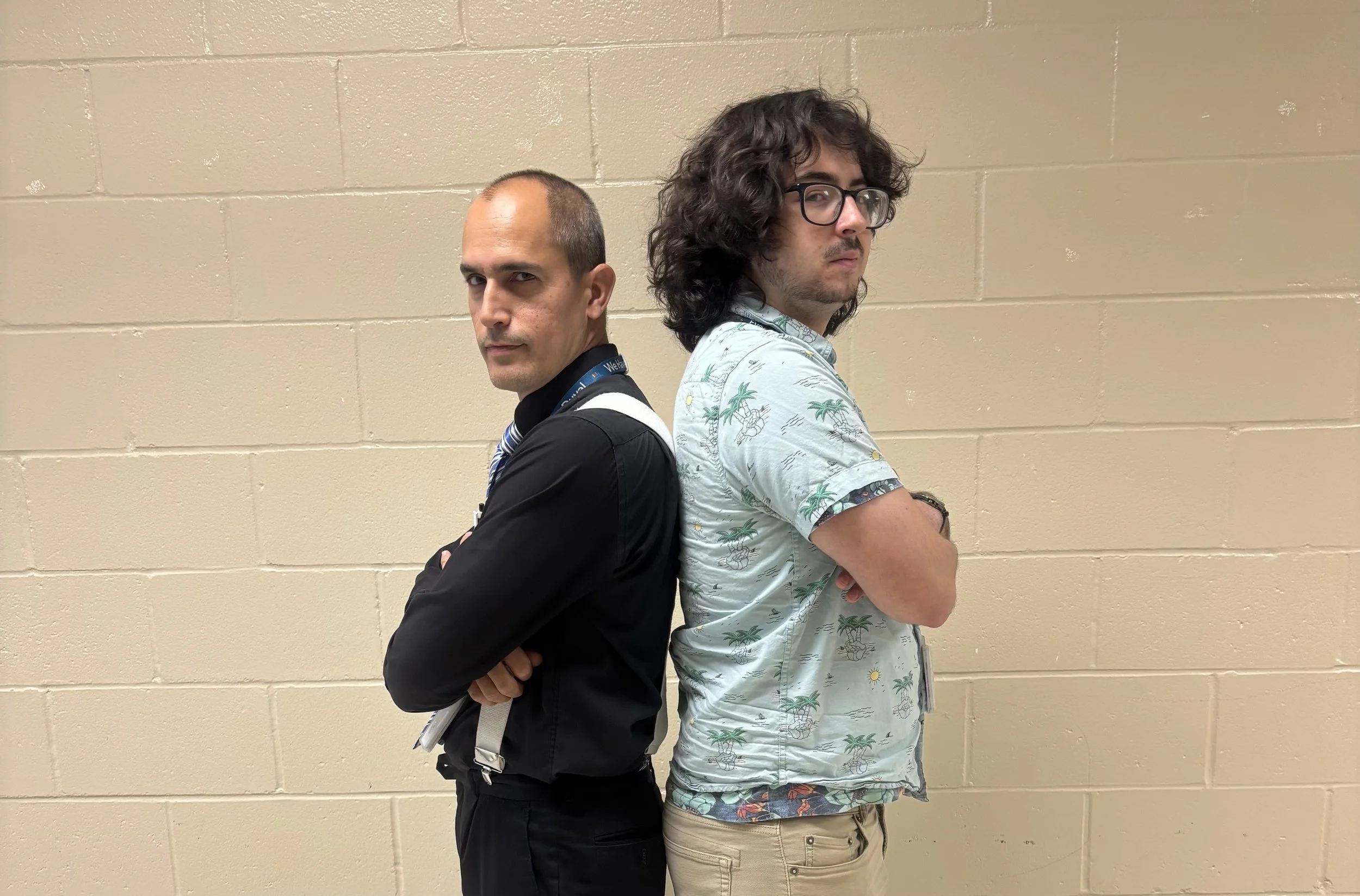
Teachers with different levels of experience collaborate to better understand their school environment rather than compete with one another.
By Victoria Ta
Experience does not always give a definite answer to every question. New teachers often enter the classroom with uncertainty, stress, and pressure to make a good impression. In contrast, veteran teachers rely on past experiences to manage time, classroom routines, and relationships with students. At Paxon, teachers and students said that becoming an effective teacher requires continued learning, adaptation and a commitment to student growth.
Christopher Konios has been teaching for four years but is a first-year teacher at Paxon, where he teaches AP World History and AP European History. For him, one of the biggest challenges of being a newer teacher is learning to trust himself.
"I think imposter syndrome has a lot to do with [it]," Konios said. He said newer teachers may question whether they belong in the classroom or are doing a good job, even when they are performing better than they think.
That uncertainty can appear in the everyday challenges of managing a classroom. For Konios, one unexpected challenge has been learning the names of all his students while balancing the demands of teaching 180 of them.
"I've sometimes been a little too nice in the past," Konios said. "It's something I still kind of try to work on."
While newer teachers are still developing those routines, a few veteran teachers argue that experience can make teaching demands more predictable.
John Maynard has taught for 24 years, including 20 years at Paxon, where he teaches AP and IB Physics. Maynard said experience has allowed him to anticipate how lessons will flow and where most students may struggle.
That confidence, however, does not develop immediately. "I think once I got that first year under my belt, I felt pretty good about like, 'hey, I can do this'," Maynard said.
For other veteran teachers, becoming more experienced has meant learning not only how to teach, but also what not to spend time worrying about.
Ninon Rhome has taught English and language arts for 32 years, including 12 at Paxon. "You don't have to grade everything, and you don't have to do everything," Rhome said. She explained that newer teachers can sometimes put unnecessary pressure on themselves by trying to accomplish everything.
That advice reflects a challenge experienced by many beginning teachers: learning how to manage competing responsibilities while developing confidence in the classroom.
Kevin Smith, who has taught at Paxon for 12 years in courses including English, Theory of Knowledge, and Film, remembers experiencing the pressure of being a new teacher himself.
Over time, Smith learned that teaching could not be about completing every task perfectly. Experience has taught him how to prioritize time management and "help newer teachers here at Paxon [by] giving them ideas or strategies to save them time."
He says experienced teachers can also make the transition easier by sharing materials and ideas with colleagues. This sort of collaboration can benefit experienced teachers as well.
Melissa Trujillo has taught at Paxon for eight years, teaching biology to first-year students throughout that time and, for the first time this year, anatomy and physiology to upperclassmen. Despite her experience, she said teachers should recognize that they are always learning.
"The fact that you're just willing to share, talk, and collaborate [is] the most important thing," Trujillo said. This collaborative mindset benefits not only newer teachers but also those who have already taught for a few years, ultimately fostering growth in both professional experience and cross-departmental relationships.
Experience can also change what teachers consider important.
Jason Cenci has taught in Duval County for 19 years and is in his third year at Paxon, where he teaches Honors Physics. Looking back, Cenci said he once spent too much time focusing on things that did not have a lasting impact.
Now, he explains how that experience helped him recognize what deserves his attention and what ultimately benefits his students.
"Keep student achievement in our minds and everything else will fall into place... the day-by-day basis is [just] there to help students grow and learn," Cenci said.
Students can also notice how experience affects the way teachers run their classrooms. Junior students Khup Thang and Mikai Davis, who are both in Ryker Flam’s class, said they have seen differences in expectations and pacing between newer and more experienced teachers.
"Teachers with more experience [teach] a greater diaspora of students," Thang said. "For old teachers, they're a bit more strict, and they expect way more from students than new teachers."
Davis said newer teachers may still be learning when to adjust their pace and give students additional time to understand the material.
“I feel like with new teachers, it’s their first time so they don’t know that they [can] slow down,” she said.
For students, however, having a newer teacher does not necessarily mean having less support. Davis said knowing a teacher is willing to support students can make a difference in the classroom.
“When they recognize that they need leniency for their students, I feel like that’s when I’m [most] supported,” Thang said.
While students can recognize differences between newer and experienced teachers, Flam is still developing his own approach to the classroom. He has taught for two years and is in his first year at Paxon, where he teaches AP Precalculus and Honors Probability and Statistics.
“A lot of teaching is about establishing routine,” Flam said.
Establishing that routine can be difficult when teachers are balancing multiple responsibilities at once. Flam said the workload involved in teaching was one challenge he did not fully anticipate.
“You’re always managing a lot, as you see. I have an interview, and I have 6 different stacks of papers. I’ve got two monitors open with different things. And on top of that, there are 15 to 40 kids in your room that you have to manage,” Flam said.
Along with managing workload and technology, Flam said newer teachers must also learn how to maintain "a line between building a relationship with a student and trying to be your friend."
That balance between connection and authority also shows up in Konios' experience as a first-year teacher at Paxon. Although he has been teaching for four years, this is his first year at the school, and he is still developing his classroom routine. However, students do not necessarily see experience as the deciding factor in teaching quality.
"I don't think that it depends on their experience because even with new teachers, they still help me," sophomore A'shay Simmons said. "They'll actually try to help me instead of just walking away."
Sophomore Natalie Parrish said Konios makes difficult material accessible by explaining lessons clearly and providing additional resources.
Although experience provides valuable knowledge, newer teachers can bring strengths of their own.
“They’re not afraid of technology... [or] switching a room around, or using nice graphics to do certain things," Rhome said.
The difference between a new and experienced teacher, then, may not simply be measured in years.
“I think it really has to do with your mindset about how you approach teaching. And if you have the right mindset, I think you’ll be successful," Principal Dr. Royce Turner said.
Turner, in his 18th year at Paxon, said teachers can struggle when they aren't adequately prepared or feel rushed by their responsibilities. He also described the importance of supporting new teachers.
“So, any new teacher that comes in, they are assigned a mentor teacher... who’s assigned to help them if they have any questions about the campus and about procedural things," he said.
Turner’s description illustrates how Paxon supports teachers who are new to the school. Having an experienced colleague available to answer questions about the campus and its procedures can help new teachers adjust while they develop their classroom practices.
Ultimately, experience may give teachers confidence, efficiency, and an instinct for what matters, but the interviews show that years in the classroom do not automatically determine teaching quality. Students value teachers who are engaging, supportive, and willing to adapt, while teachers themselves emphasize collaboration and continual growth.
Maynard said that even after decades of teaching experience, teachers should continue to learn from past mistakes.
“It is important to never stop learning, never stop trying to improve things, and to make things better. Not only for me, but for my students too.”